Syed Ali Haider Jaffery

AI & Machine Learning Engineer

I build retrieval systems that would rather say nothing than cite something that isn't there.

I'm Ali Haider — a final-year computer science student in Lahore who spends most of his time on the unglamorous half of applied AI: chunking strategies, hybrid retrieval, reranking, and the guardrails that decide when a model should decline to answer.

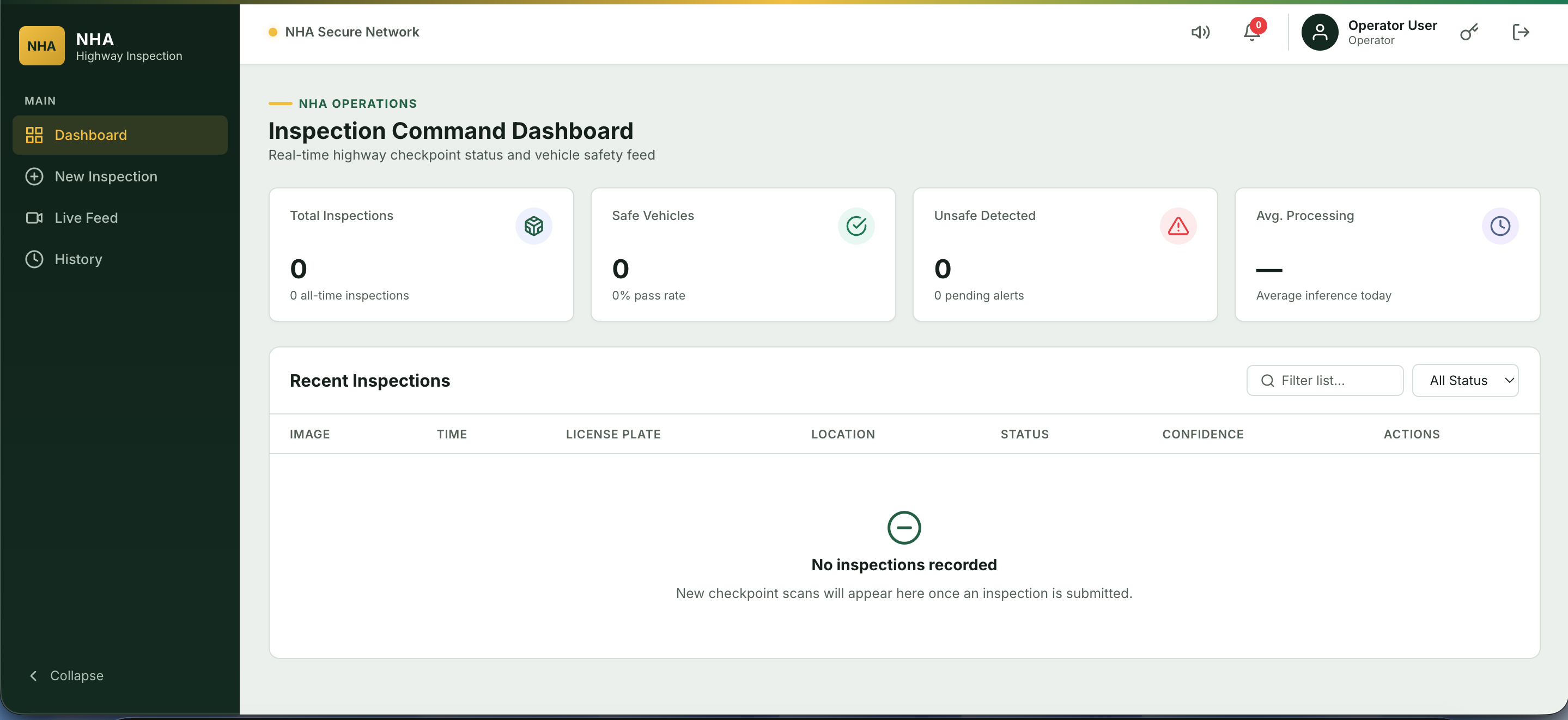
Recent work includes citation-first RAG services over Pakistani tax and traffic legislation, and a computer-vision tyre-inspection platform built around the assumption that a false approval costs more than a false rejection.

Focus
Retrieval-augmented generation
Based in
Lahore, Pakistan
Currently
BS Computer Science, University of Lahore
Credentials
Stanford Online · DeepLearning.AI · IBM

01

About

A short version of how I got here and what I'm looking for next.

Syed Ali Haider Jaffery

Lahore, 2026

I started with Python and a few web-development tutorials in 2020, and drifted toward machine learning once it became clear that the interesting problems were less about writing the model and more about deciding what the model should be trusted to do.

Most of what I've built since has been retrieval-heavy: systems that read a real corpus, find the passage that actually answers the question, and refuse when the corpus doesn't contain one. Alongside that, a final-year computer-vision project on tyre defect classification, and a CRM where LLM features had to coexist with role-based access control and customer-data protection.

I'm looking for a first engineering role where I can work alongside people who have shipped this kind of thing before — and keep learning at the pace I have been.

Studying
BS Computer Science
University
University of Lahore
Since
2021
Status
Open to work

02

What I work with

Grouped by what it's for rather than by vendor. Everything listed here has been used on something that ran.

A

Core ML & deep learning

Supervised and unsupervised methods, and the diagnostics that tell you which one is failing.

  • Supervised & unsupervised learning
  • Reinforcement learning
  • CNNs, RNNs, LSTMs
  • TensorFlow, PyTorch
  • Feature engineering & EDA
  • Bias/variance diagnostics

B

LLMs & generative AI

Adapting pretrained models without retraining them from scratch, and measuring whether it worked.

  • Transformer internals
  • Hugging Face Transformers
  • Prompt engineering
  • LoRA / QLoRA fine-tuning
  • Tokenization & embeddings
  • LLM evaluation

C

Retrieval & vector search

The part I spend most time on: getting the right passage in front of the model, then proving it was the right one.

  • Hybrid RAG pipelines
  • pgvector, Pinecone, Chroma
  • Reciprocal rank fusion
  • Cross-encoder reranking
  • Chunking strategies
  • Citation validation & abstention

D

Deployment & MLOps

Treating the running service, not the trained checkpoint, as the thing being delivered.

  • FastAPI & Flask services
  • Docker & containerization
  • Quantization
  • Structured logging & health probes
  • Git & version control
  • Render, Vercel, DigitalOcean

03

Selected work

Five projects, described in the terms that actually matter — corpus size, latency, recall, and what the system does when it isn't sure.

FBR Income Tax Research Assistant interface

01 / LLM & RAG Systems

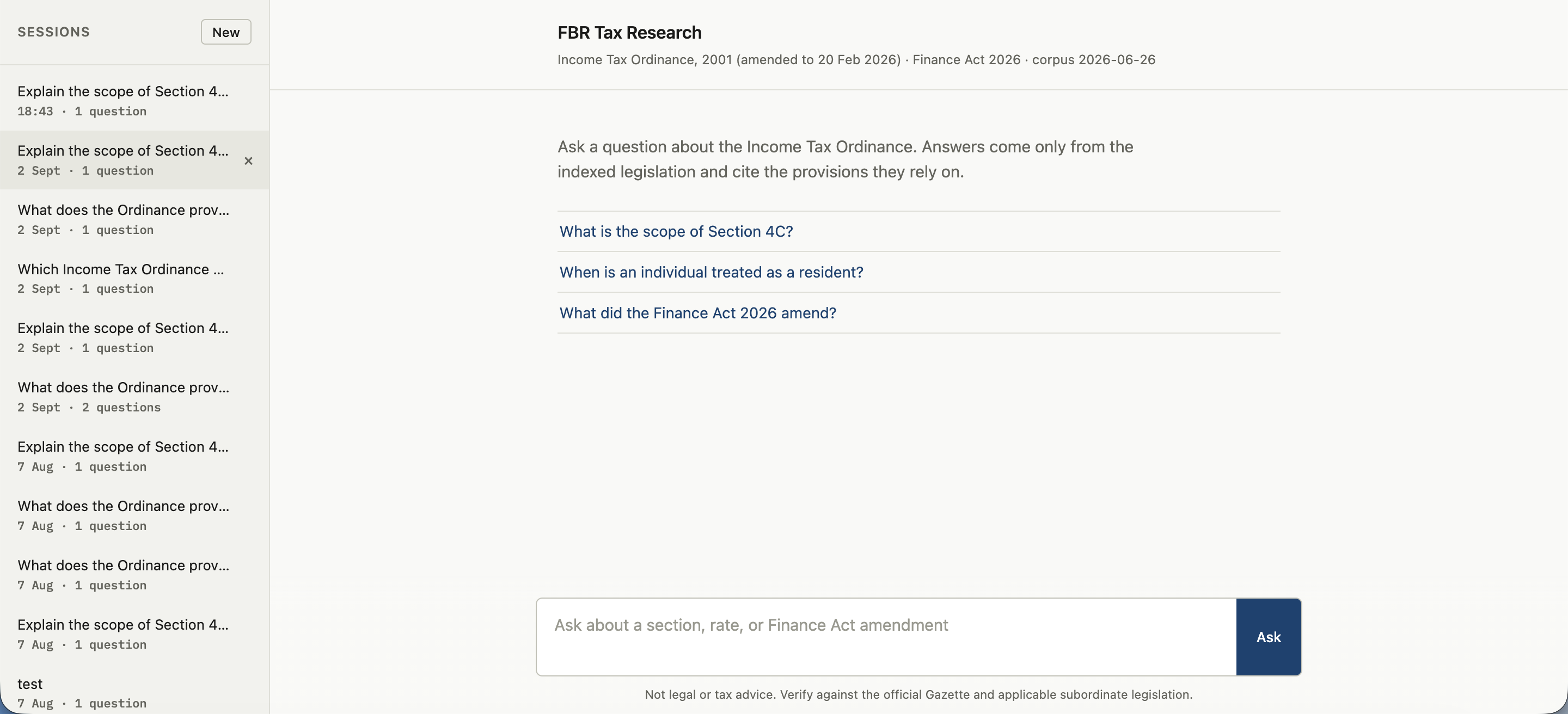
FBR Income Tax Research Assistant

Citation-first RAG service over 1,962 indexed chunks of Pakistani tax legislation — 238 statutory provisions across 1,077 pages. Hybrid retrieval fuses exact-section lookup, full-text search, and 768-dim vector similarity via Reciprocal Rank Fusion, reaching 71.9% recall@6 at 620ms p50 latency. A 7-node LangGraph workflow with a citation-validation gate turns unsupported answers into explicit corpus-boundary abstentions instead of hallucinated citations.

RAG · LangGraph · FastAPI · pgvector · Neon · Python
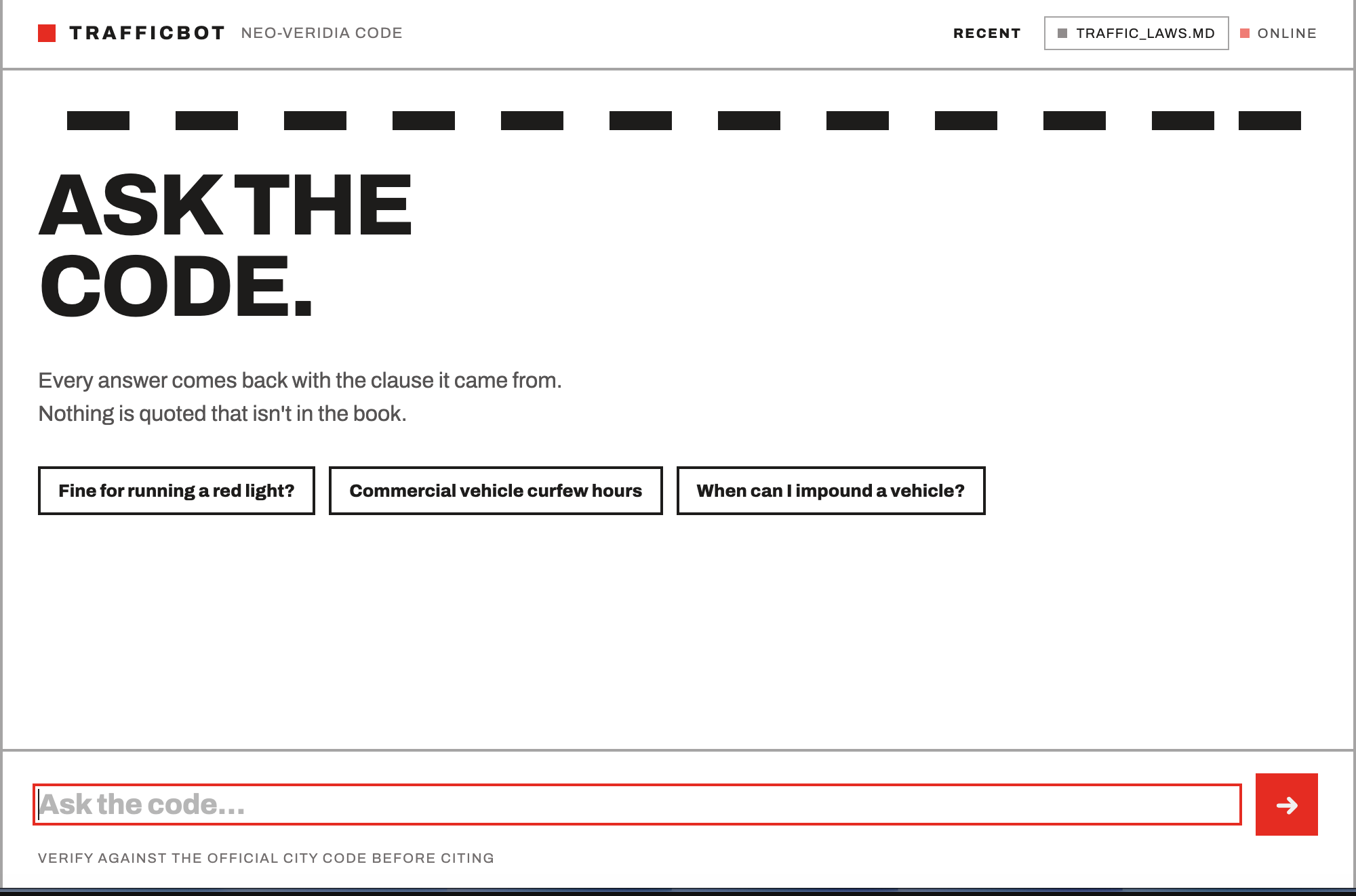
Pakistani Traffic-Law RAG Assistant interface

02 / LLM & RAG Systems

Pakistani Traffic-Law RAG Assistant

Production hybrid RAG system over 421 pages of Pakistani traffic legislation with 1,406 vector-indexed chunks, using SQL-native retrieval — pgvector, PostgreSQL full-text search, RRF, and cross-encoder reranking. Refactored from a stateful singleton into a stateless, horizontally scalable service with structured logging, health probes, and SHA-256 deduplication. Hits 11ms query embedding and 29 chunks/sec indexing on CPU-only hardware.

RAG · pgvector · PostgreSQL · Cross-Encoder Reranking

No public preview

03 / Computer Vision / Deep Learning

Automated Tyre Inspection System (ATIS)

Final year project: an end-to-end computer-vision platform classifying cracked vs. normal tyres using a YOLO (Ultralytics) model across a structured train/validation/test dataset. A fail-safe confidence threshold clears tyres only on confident normal predictions and routes uncertain cases to manual review — treating false approvals as the costlier error. Live inspection runs on OpenCV scan-zone calibration and MJPEG streaming behind a role-based Flask dashboard hardened with auth, CSRF protection, rate limiting, and upload validation. Selected for SEE Pakistan, the UOL startup championship.

YOLO · OpenCV · Flask · PostgreSQL · Computer Vision

SafarCRM — AI-Powered, Secure CRM interface

04 / AI-Powered Applications

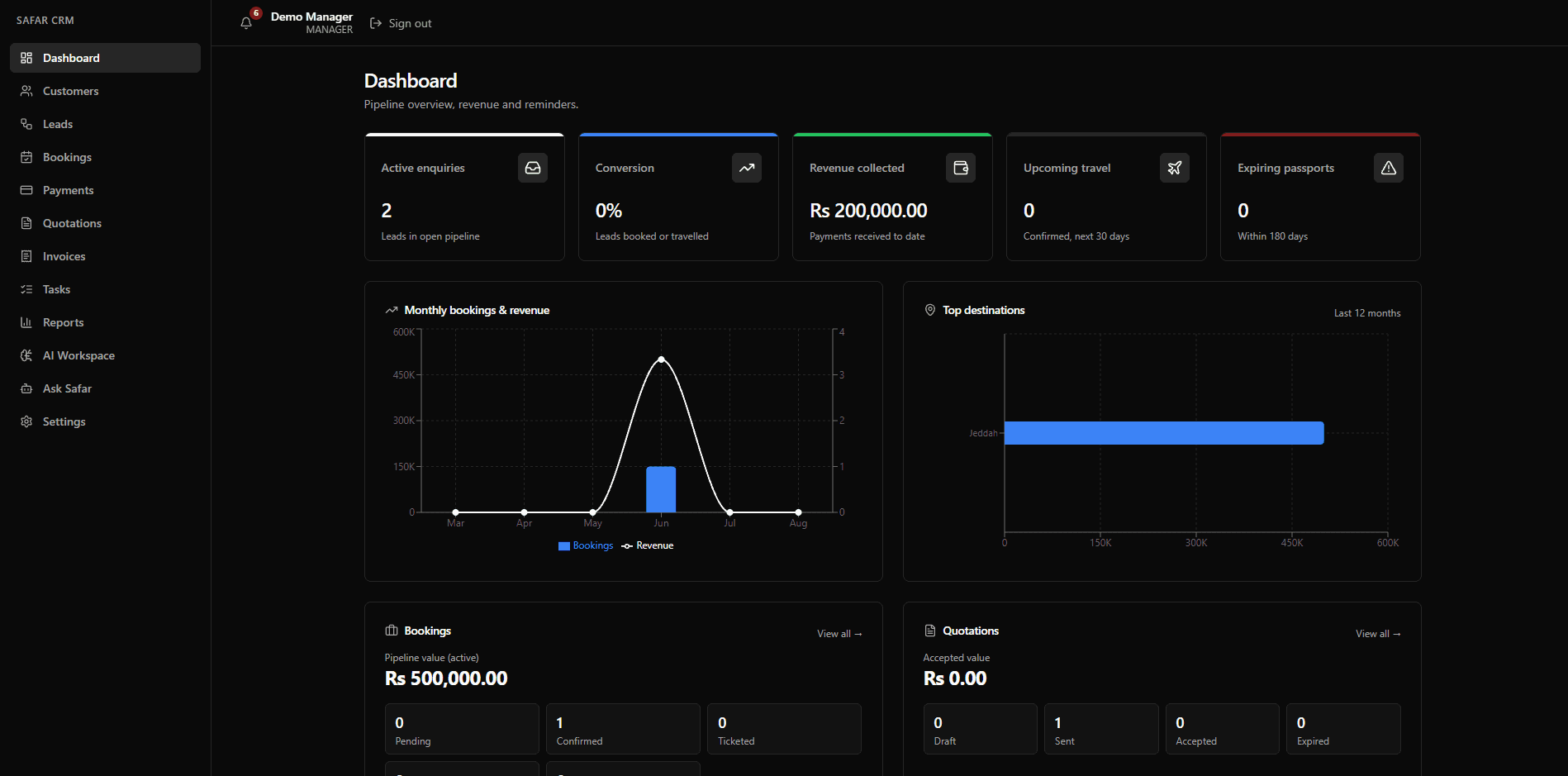
SafarCRM — AI-Powered, Secure CRM

CRM platform where engineered prompts drive LLM-powered features that automate customer-relationship workflows. Built around authentication, RBAC, and customer-data protection, containerized with Docker and deployed across Render and Vercel.

LLM Integration · Docker · RBAC · Render · Vercel

Online OpenMP Compiler interface

05 / Systems & Tooling

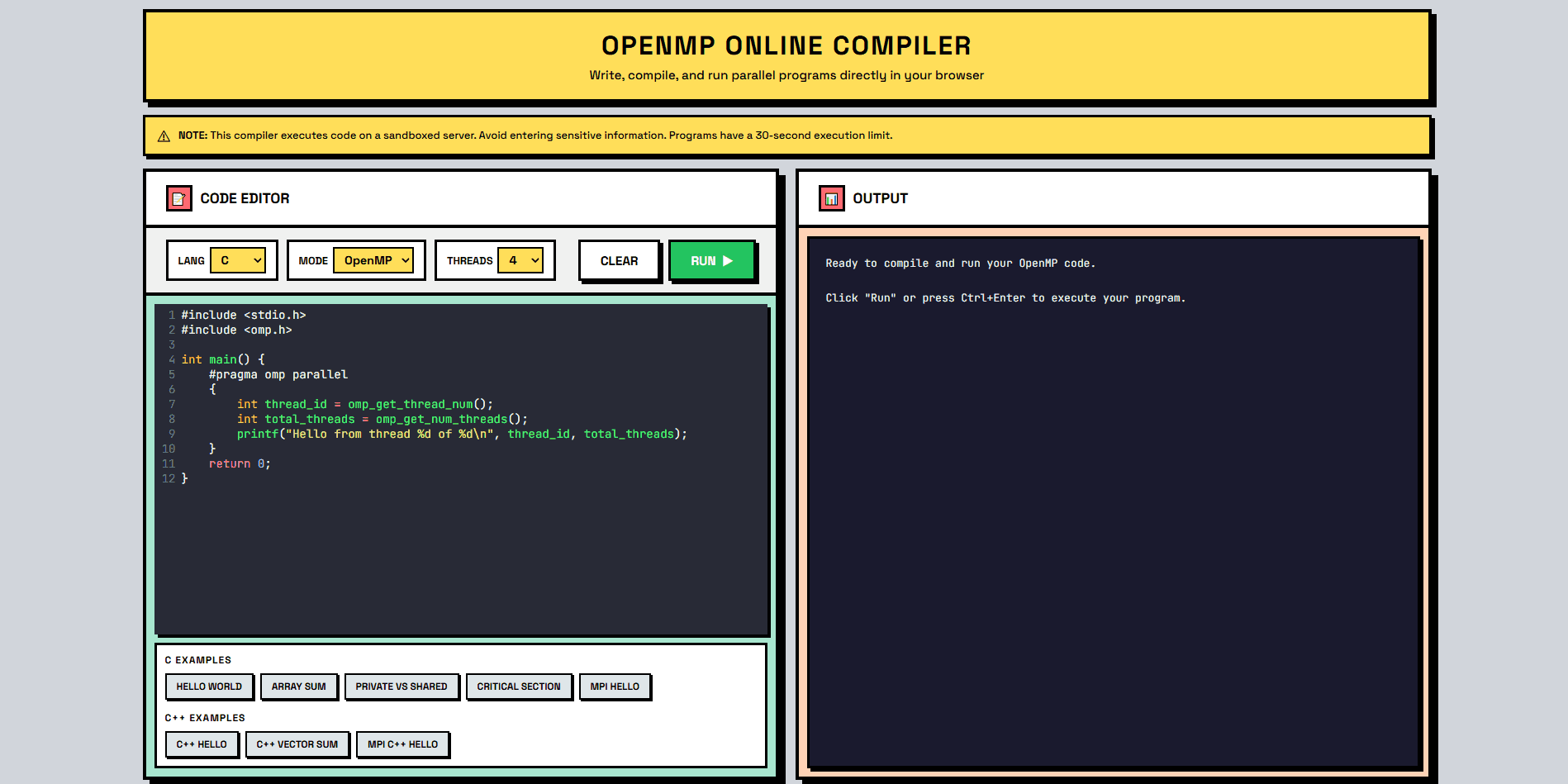
Online OpenMP Compiler

Browser-based compiler that executes C/C++ with OpenMP parallel-programming support. Built both the execution backend and the in-browser coding interface.

C · C++ · OpenMP · Web Application

A fuller list, grouped by discipline, lives on the work page.

04

Education

Expected Jul 2026

BS Computer Science

The University of Lahore

2021

GCE A-Levels

Beaconhouse School System, Defence Campus

05

Credentials

Coursera certificates from Stanford Online, DeepLearning.AI and IBM. Each one links to the PDF and to Coursera's own verification record.

Specialization

Stanford Online & DeepLearning.AI

Aug 2025

Machine Learning Specialization

Andrew Ng's three-course foundation in modern ML: supervised learning through linear regression, logistic regression, neural networks and decision trees; unsupervised learning through clustering and anomaly detection; then recommender systems and reinforcement learning. The emphasis throughout is on the judgment around the model — bias/variance diagnostics, error analysis, and choosing an algorithm that actually fits the problem.

  1. 01Supervised Machine Learning: Regression and Classification
  2. 02Advanced Learning Algorithms
  3. 03Unsupervised Learning, Recommenders, Reinforcement Learning

Specialization

DeepLearning.AI

Sep 2025

Deep Learning Specialization

Five courses building neural architectures from the ground up — CNNs, RNNs, LSTMs and Transformers — alongside the optimization toolkit that makes them train: dropout, batch normalization, Xavier/He initialization, and systematic hyperparameter tuning. Applied in Python and TensorFlow across speech recognition, machine translation, and natural language processing cases.

  1. 01Neural Networks and Deep Learning
  2. 02Improving Deep Neural Networks: Hyperparameter Tuning, Regularization and Optimization
  3. 03Structuring Machine Learning Projects
  4. 04Convolutional Neural Networks
  5. 05Sequence Models

Course

DeepLearning.AI & Amazon Web Services

Nov 2025

Generative AI with Large Language Models

The LLM lifecycle end to end: transformer internals and the attention mechanism, prompt engineering, and the compute-efficiency tradeoffs of adapting a model — full fine-tuning versus parameter-efficient methods such as LoRA — through to RLHF alignment and the practicalities of serving a model in production.

Course

DeepLearning.AI

Oct 2025

Retrieval Augmented Generation (RAG)

Grounding model output in an external corpus rather than in parametric memory: document chunking strategies, embeddings and vector search, retriever design, reranking, and evaluating whether a generated answer is genuinely supported by what was retrieved. The direct theoretical basis for the citation-first retrieval systems in my project work.

Course

IBM

Dec 2025

Agentic AI with LangChain and LangGraph

Building systems where the model plans, calls tools, and carries state across steps — composing LangChain components into LangGraph's explicit graph-based workflows, with branching, loops, and controlled multi-step execution instead of a single opaque prompt.

Course

DeepLearning.AI

Dec 2025

Machine Learning in Production

The MLOps discipline that surrounds the model: scoping an ML system, deployment patterns such as shadow and canary rollouts, monitoring for data and concept drift, and managing the data pipeline across the full lifecycle. Treats the deployed system — not the trained checkpoint — as the actual deliverable.

Course

Edureka

Dec 2025

Generative AI Automation Tools and Applications

An applied survey of the generative-AI tooling landscape and how those models get wired into practical automation workflows across text, image, and productivity use cases — the integration layer rather than the model layer.

Project

Coursera Project Network

Aug 2025

Get Started with Canva

A short guided project on Canva's design toolkit — layouts, brand-consistent visual assets, and export workflows — used for producing clean diagrams and presentation material alongside technical work.

06

Get in touch

Open to junior AI/ML engineering roles and to collaborating on retrieval or computer-vision work.

Email is the most reliable way to reach me. The form opposite drafts a WhatsApp message instead, if that's easier.